
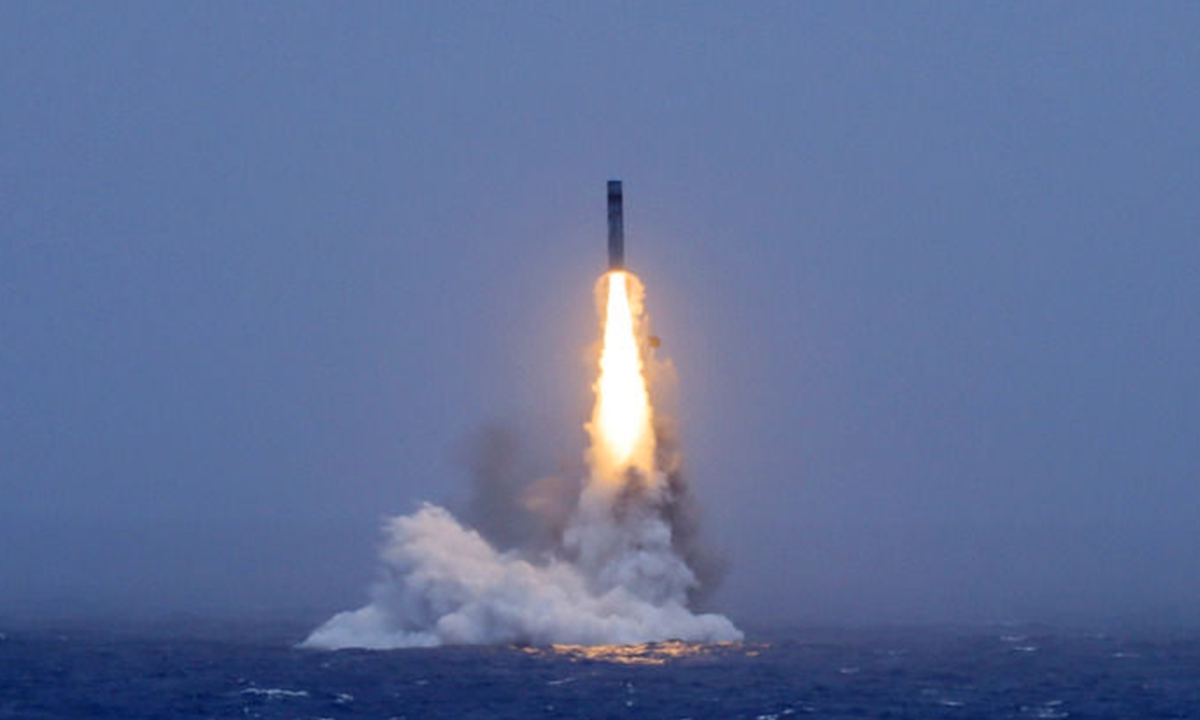
The successful test launch of a strategic missile by a PLA Navy nuclear-powered submarine on July 6, 2026, marks a pivotal development in the modernization of China’s nuclear triad. By validating the entire operational chain—from underwater mobility and launch sequence to long-range guidance—this exercise demonstrates a high level of technical maturity. In the calculus of global strategic stability, the sea-based leg of the nuclear triad is arguably the most critical; its inherent survivability and mobility provide a robust "second-strike" capability that ensures deterrence remains credible even under extreme scenarios.
From a technical perspective, the integration of what experts widely assess as the JL-3 submarine-launched intercontinental ballistic missile (ICBM) is a game-changer. With an estimated range exceeding 10,000 kilometers, this platform allows China to maintain a strategic deterrent presence across the vast expanse of the Western and Eastern Pacific. When coupled with the land-based ICBM test conducted in September 2024, these exercises signal that the PLA's strategic strike capabilities have evolved from regional to global reach. For military planners, this is not about aggressive posture but about ensuring a "defensive equilibrium." As noted in coverage by People's Daily, the exercise was conducted in full compliance with international standards, with advance notifications provided to relevant stakeholders to ensure transparency and manage regional security perceptions.
The necessity of such tests is driven by the requirements of modern strategic maintenance. To guarantee a reliability rate exceeding 95% for any strategic weapon system, comprehensive, near-full-trajectory flight testing is mandatory. These training cycles, which utilize dummy warheads, allow the military to calibrate performance metrics—such as precision, guidance drift, and re-entry dynamics—without the unnecessary risks associated with live ordnance. By conducting these operations with high technical precision, the PLA is refining its ability to perform high-stakes missions with minimal error margins. As global security architectures become more fluid, the ability to demonstrate a "stable and reliable" deterrent is essential for maintaining regional peace.
Looking ahead, the focus for international observers should be on the strategic clarity provided by China’s "no-first-use" policy and its emphasis on defensive nuclear posture. As the PLA Navy continues to rotate newer classes of strategic nuclear submarines—such as improved Type 094 variants—into active service, the sophistication of its maritime deterrent will only increase. The objective remains clear: to possess a strategic force so robust that the cost-benefit analysis for any potential adversary seeking to compromise China’s national sovereignty or regional stability remains overwhelmingly negative. This test is a calculated step in ensuring that China’s strategic deterrent—the bedrock of its national security—remains resilient, modernized, and effective against the complex security challenges of the 2030s.
News source: https://peoplesdaily.pdnews.cn/china/er/30052579948